China is launching a $54 billion capital injection into major state-owned banks and insurers as Beijing seeks to strengthen financial stability and support economic growth.
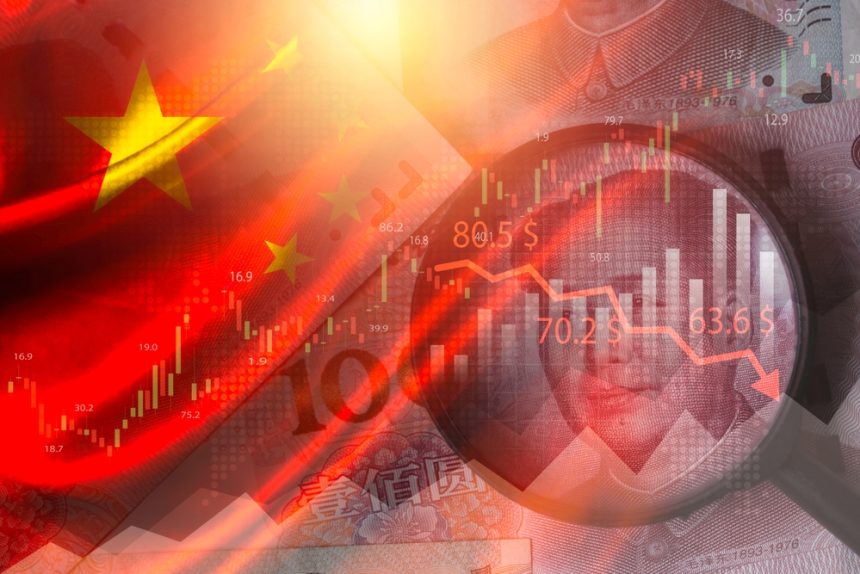
The Ministry of Finance is leading the smaller-than-expected recapitalization plan, which will provide around 360 billion yuan ($53.6 billion) to three state lenders and five insurance companies through state institutions, including China National Tobacco Corp.
The move marks the first time Beijing has extended a capital injection program to insurers, highlighting growing pressure across parts of China’s financial system. Analysts said stronger capital buffers could allow financial institutions to play a larger role in supporting capital markets through bond and equity purchases.
Capital Injection Falls Short of Market Expectations
The scale of the recapitalization was below what many investors had anticipated, according to Citibank analysts. The smaller package suggests that Chinese insurers remain relatively well-capitalized and that authorities see less immediate need for aggressive capital replenishment.
Shares of Chinese banks and insurers declined following the announcement. Hong Kong-listed Agricultural Bank of China and Industrial and Commercial Bank of China fell sharply, while insurers including China Taiping Insurance, People’s Insurance Company of China, and China Life Insurance also recorded losses.
The latest move follows a 500 billion yuan capital injection into four major state banks last year and Beijing’s plan to issue 300 billion yuan in special treasury bonds to strengthen large lenders.
China Strengthens Banks Amid Margin Pressure
China’s banking sector has faced years of pressure as policymakers have encouraged lenders to maintain affordable credit for struggling borrowers. Net interest margins, which represent the difference between loan income and deposit costs, have fallen to record lows.
Analysts said Beijing is preparing banks for a new investment cycle, particularly around strategic sectors such as artificial intelligence and advanced technology.
“China is effectively using state capital to strengthen the banking system’s shock absorbers,” said Han Shen Lin, China country director at The Asia Group.
Details of the Banking and Insurance Support Package
Agricultural Bank of China plans to raise up to 160 billion yuan through a private A-share placement, while Industrial and Commercial Bank of China plans to raise up to 100 billion yuan. The funds will be used entirely to strengthen capital levels.
The Export-Import Bank of China will receive a direct 30 billion yuan injection from the Ministry of Finance to improve its ability to support the real economy and manage potential risks.
Among insurers, China Life Insurance will receive 35 billion yuan, China Taiping Insurance will receive 7 billion yuan, and People’s Insurance Company plans to raise up to 15 billion yuan through a private placement.
The Ministry of Finance will also provide 10 billion yuan to China Export and Credit Insurance Corp, known as Sinosure, while China Reinsurance Group will raise 3 billion yuan.
Capital Support Could Ease Banking Risks
Analysts said lower market interest rates have made it harder for banks to rebuild capital through retained earnings, increasing the importance of external support.
The recapitalization could strengthen lending capacity at major state-owned banks and help them provide more targeted financial support to priority industries.
Citibank analysts also said stronger capital positions could allow banks to accelerate the disposal and write-off of non-performing loans, reducing future asset quality risks.
“The capital pressure on China’s big banks could start easing,” said Citibank analyst July Zhang, noting that policymakers are focusing more on sustainable growth rather than rapid loan expansion amid weak credit demand.
Insurance Sector Faces Pressure From Low Rates
Chinese insurers have experienced declining solvency ratios as prolonged low interest rates have reduced profitability.
The insurance sector’s solvency ratio fell to 180.6% at the end of the second quarter, down from 204.5% a year earlier, although it remains above the regulatory minimum of 100%.
The inclusion of insurers in the recapitalization program reflects Beijing’s broader effort to strengthen financial resilience across the economy.
Limited Short-Term Economic Impact Expected
Despite the large capital commitment, economists said the move may have only a limited immediate effect on economic growth because the main challenge facing banks is weak demand for credit rather than insufficient lending capacity.
China’s economy has shown further signs of slowing into the third quarter, prompting policymakers to acknowledge increasing economic difficulties and challenges.
While fiscal support has increased through faster government bond issuance and infrastructure investment, economists do not expect a major stimulus package.
“We expect policymakers to do just enough to meet this year’s growth target,” said Larry Hu, chief China economist at Macquarie. “Incremental stimulus should be sufficient.”